Making the Connection
First-year UGA students build relationships, explore culture through Connect Abroad
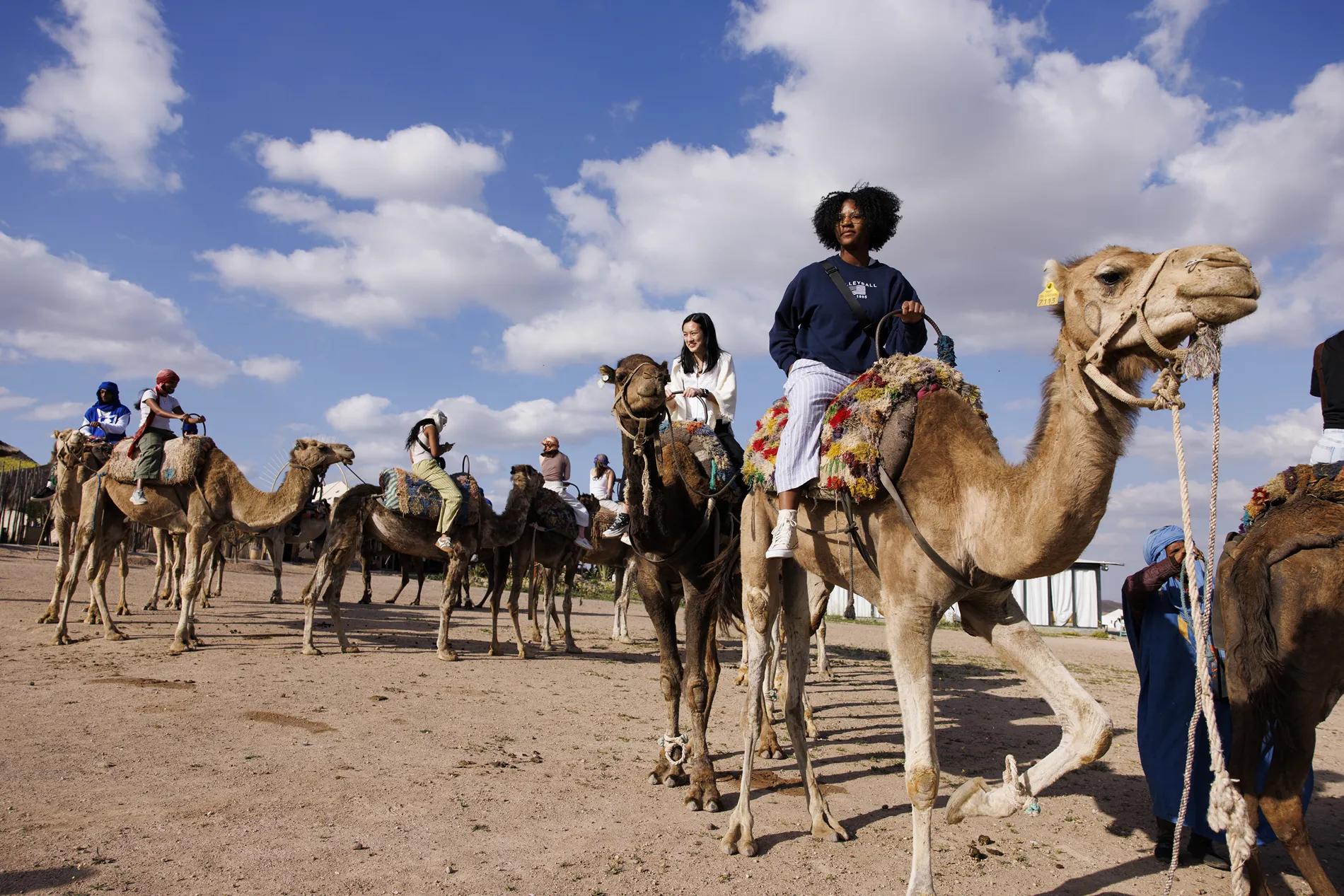
Morocco is a study in contrast—from the color and chaos of Casablanca to the silence and serenity of the Agafay Desert.
The 29 University of Georgia students who visited Morocco during Spring Break through the Connect Abroad: Discover program are just as different and equally as vibrant.
“Previous to the trip, I didn’t know anyone else who was going,” says Annie Torres-Espino, who plans to double major in marketing and sports management. “One of the things that contributes to being able to bond so quickly is the willingness to embrace this trip and be so vulnerable. We’re all on this trip together.”
Connecting Abroad
Designed exclusively for first-year students across all academic areas, Connect Abroad: Discover not only introduces participants to UGA’s international education opportunities but also to a new culture through immersive, hands-on experiences. They study a wide range of cultural, historical, economic, and social topics with UGA faculty and staff members over Spring Break. In addition to Morocco, this year students explored Costa Rica, Croatia, Estonia, Germany, Greece, and Portugal.
“The other part of Connect Abroad is the connection,” says Kay Stanton, assistant director of operations for the Office of Experiential Learning. “This is a great way for these students to make those connections with their peers. It’s one more way for them to feel more connected with UGA.”

“Things like study abroad are so impactful and meaningful because they help you think about the application of whatever you’re learning beyond what’s immediately in front of you.”
– Meseret Hailu, Assistant Professor, Louise McBee Institute of Higher Education
For students looking to delve deeper into a specific discipline, Connect Abroad: Immerse programs, also held during Spring Break, allow first-year students within a specific college or major to connect their academic or career interests with global experience.
This year, biology students studied in Belize, School of Computing students visited London, Honors students ventured to Finland to study sustainability, and psychology students traveled to Amsterdam to learn about the relationship between urban life, well-being, and work-life balance.
Connect Abroad: Explore goes even deeper with a Maymester session in Thailand, where students examine urban development in Bangkok, environmental conservation in the northern region, and sustainable tourism in the south.
By introducing first-year students to study abroad opportunities early, they feel more comfortable and willing to take on more advanced study abroad opportunities later.
“Doing experiential learning early on gives students opportunities to do more in-depth or challenging experiential learning later on during their time here,” Stanton says. “We want them to be able to do more than one thing.”
Creating Cultural Connections
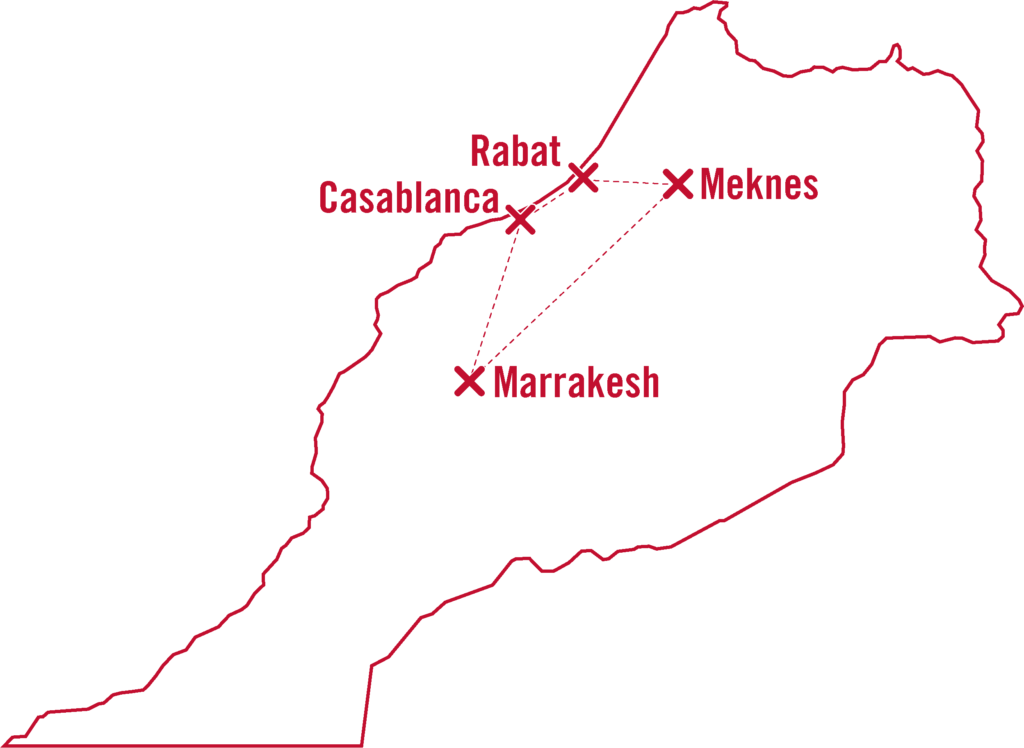
In Morocco, students toured Marrakesh, Meknes, Rabat, and Casablanca, wandering through crowded medinas and visiting palaces and other significant sites. Outside the cities, students explored the ancient Roman ruins of Volubilis and the forest of Maâmora. They even learned how to prepare traditional Moroccan appetizers and tagine, a slow-cooked stew served in a North African earthenware pot with a cone-shaped lid, during a cooking class.
But the amazing experiences are only part of the point of these trips; the other part is reflecting on what these experiences mean in a broader context.
Throughout the trip, students shared their observations during regular reflection circles and completed an assignment for academic and experiential learning credit. Meseret Hailu, assistant professor at the Louise McBee Institute of Higher Education and the trip’s lead faculty member, focused much of the discussion on higher education development in Morocco, but she also encouraged personal reflections.
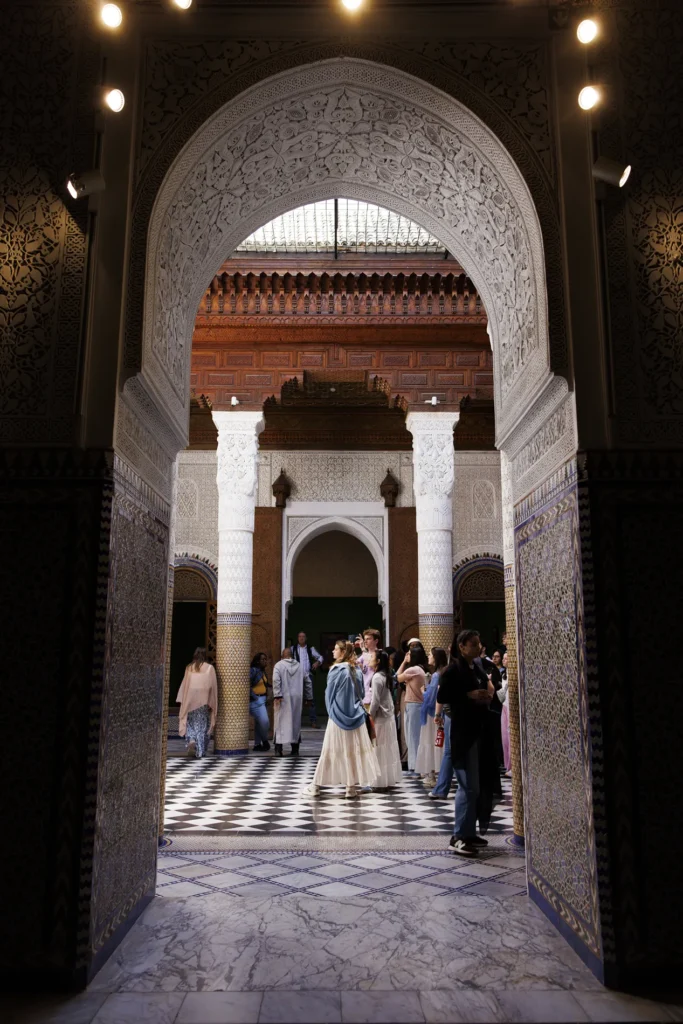
For example, Peyton Bergquist, a regenerative bioscience and applied biotechnology major, learned that to Moroccans, the exteriors of their mosques weren’t nearly as important as the interiors.
“They told us it was because they want you to focus more on yourself—the inside—instead of the outside,” Bergquist says. “I think that was something I need to reflect on in my life, too. We’ve got to look at ourselves on the inside and think, ‘I need to look good and do this for myself.’”
“Study abroad shows you how big and really quite beautiful the world is,” Hailu says. “You get to experience all five senses. You get to see, smell, hear things that are different, really vibrant and different. It puts things in your life into perspective, whether they are challenges or triumphs.”


After their trips, each student submits at least four photos with short essays that explain why the image represents the overall impact of the program. From there, each Connect Abroad program selects four favorite photos to be displayed alongside their essays in the Tate Student Center, offering a look at their travels across the globe. The PhotoVoice project is part of an ongoing research project by Maria Navarro, Josiah Meigs Distinguished Teaching Professor in the College of Agricultural and Environmental Sciences, who has led multiple Connect Abroad trips.
“Things like study abroad are so impactful and meaningful because they help you think about the application of whatever you’re learning beyond what’s immediately in front of you,” Hailu says.

Building those Connections
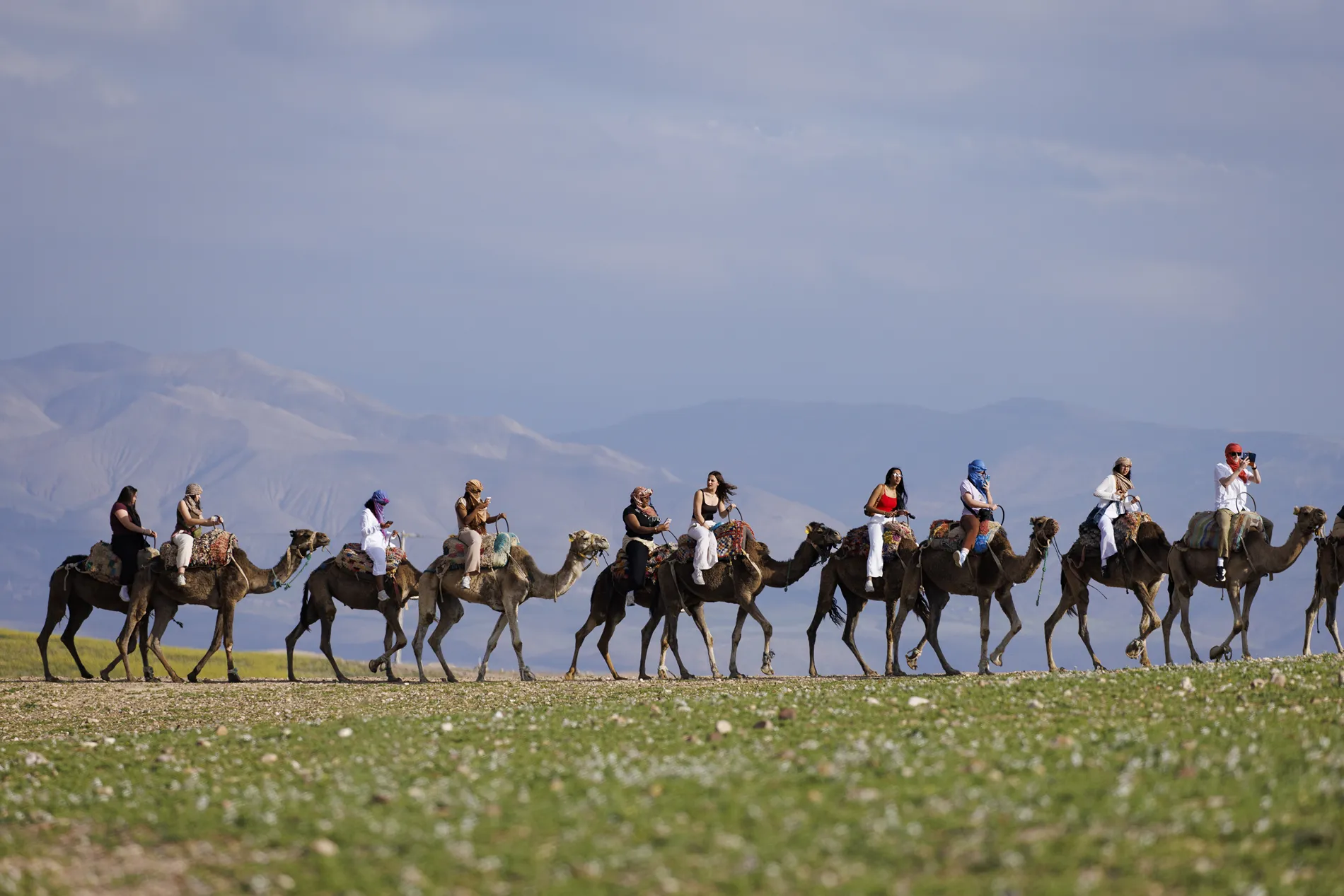
One strength of Connect Abroad trips is the bonds the students create during their travels.
“Even if we come from different backgrounds, what we all have in common is the want to travel and to understand these different cultures and perspectives,” Torres-Espino says.
Those bonds build in the quiet, in-between moments—chatting on the bus between stops, sitting around a campfire under a sky full of stars in the desert until the early morning hours, and mumbling an almost inaudible, “Good morning,” to fellow travelers before that first sip of coffee at breakfast.
“Programs like Connect Abroad are a powerful way to build cultural awareness, make lasting friends, develop a sense of responsibility and see yourself as part of a much larger system, and I think that’s particularly important for first-year students,” says Cora Keber, director of education at the State Botanical Garden of Georgia and staff lead on the trip to Morocco.


Seeing the Impact
In its three years, approximately 640 students have spread their wings on a Connect Abroad trip, demonstrating the continued strength of UGA’s study abroad programs.
In fact, the university ranks No. 1 in the nation for short-term study abroad participation and No. 5 overall, according to the 2025 Open Doors Report released by the Institute of International Education in partnership with the U.S. Department of State.
During the 2023-2024 academic year, more than 3,300 students studied abroad in 68 different countries. In the 2025-2026 academic year, the university offered 154 faculty-led study abroad programs.
The university also continues to expand access to these programs. In 2023-24, 679 UGA students received more than $1.46 million in Office of Global Engagement scholarships for study abroad opportunities. Additionally, the UGA Office of the President has funded 2,600 Passport Scholarships since the program began.
Opportunities like Connect Abroad whet students’ appetites to participate in more study abroad programs, and many of the students who traveled to Morocco already have travel plans for their next study abroad—some traveling again as soon as this summer.
“We hope that these programs inspire students to revisit a country they’re passionate about,” says Casey Carrell, senior program manager in the Office of Experiential Learning.
And that is the goal—not just to see one awe-inspiring place, but to continue learning and growing as global citizens. These opportunities allow students to discover something new about themselves, discover new places, and discover new ways to learn.