Accessibility by Design
From interpreting musical theater to redesigning campus technology, Ava Gilbert
is shaping campus experiences so no one is left out.
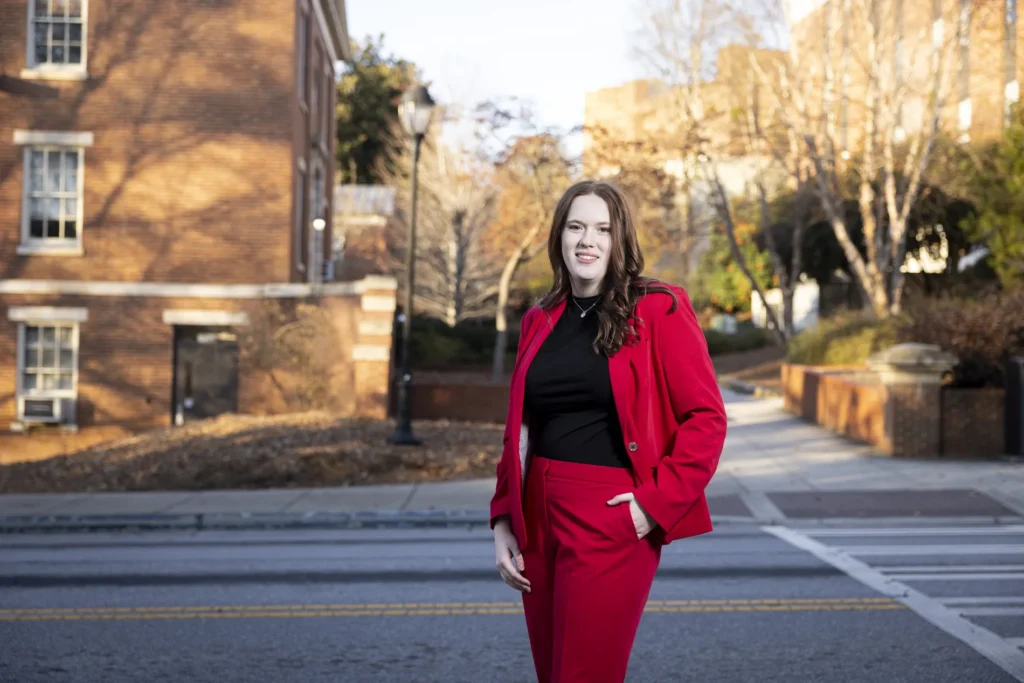
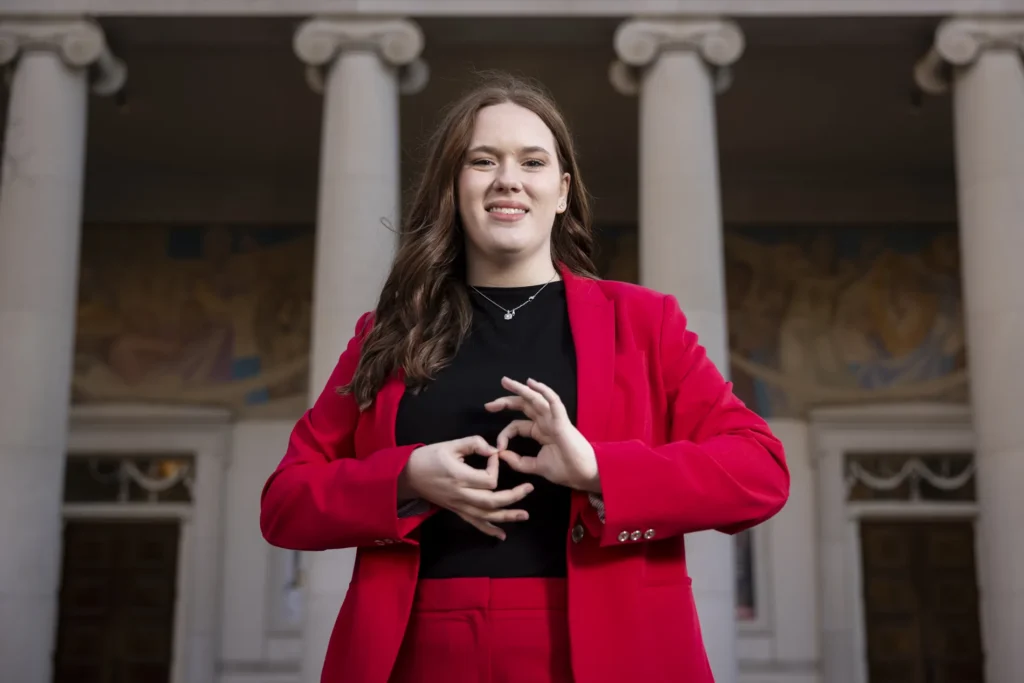
When Ava Gilbert first began learning American Sign Language, it wasn’t for a class or a credit—it was for connection. Her journey started in high school, inspired by a friend who lost her hearing and another who was Deaf. Determined to communicate authentically without an interpreter, Gilbert began learning ASL on her own, one sentence at a time.
“I would Google things, and I would come back to church on Sundays with one new sentence,” she says. “And I would sign, ‘How was school?’ And she would respond, but I would have no clue what she said.”
That simple act of friendship sparked a passion that has grown into a powerful mission.
Gilbert AB ’25 graduated from the University of Georgia in December with a bachelor’s degree in political science and a minor in ASL. She is pursuing a Master of Public Administration in the School of Public and International Affairs.
Gilbert has become an advocate for accessibility, especially for the Deaf and Hard of Hearing community. Her work is rooted in a belief that everyone deserves to be understood.
“I just encourage people to listen to others’ stories,” she says. “When someone says they’re Deaf or Hard of Hearing, take the time to hear their experience, because I guarantee you, it’s not the same as what you think it is.”
From Diagnosis to Determination
Thirteen days into her freshman year, Gilbert received her own diagnosis: ADHD and autism. It was a moment of confusion and fear. How could she succeed at a rigorous university when she was just beginning to understand her own learning needs?
A conversation with Erin Benson at UGA’s Office of Accessibility and Testing reframed everything. “Having a disability doesn’t make you incapable,” Benson says. “It just makes learning different.”
That moment transformed Gilbert’s perspective. She realized that using accommodations was simply what she needed to have an equal opportunity to learn and succeed. Once she understood that, her passion for accessibility advocacy took root. Gilbert shares her story, knowing many students feel vulnerable, and she’s determined to be a voice for them.
Advocacy in Action
Gilbert’s resume reflects an intentional journey to pursue her passion for accessibility advocacy. She has worked with the Office of Accessibility and Testing and served as an accessibility ambassador on the Dean of Students Advisory Board since her freshman year, ensuring that disability voices are heard in campus-wide conversations.
As for her coursework, she takes every opportunity to explore disability policy. “I’ve written about disability in every SPIA class I’ve taken,” she says. “It’s always relevant.”
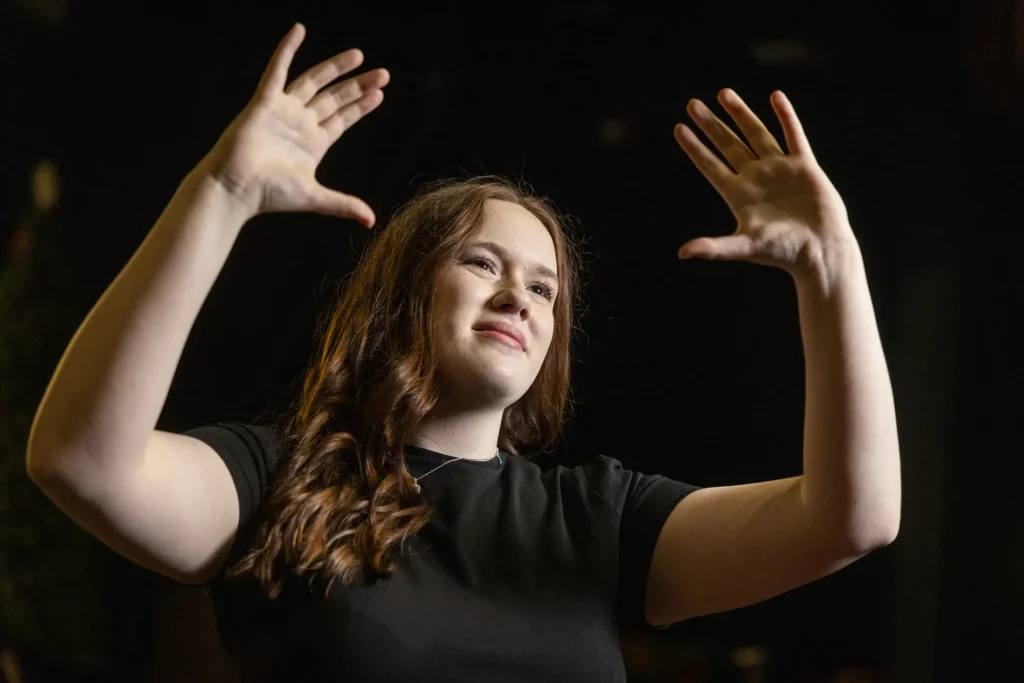
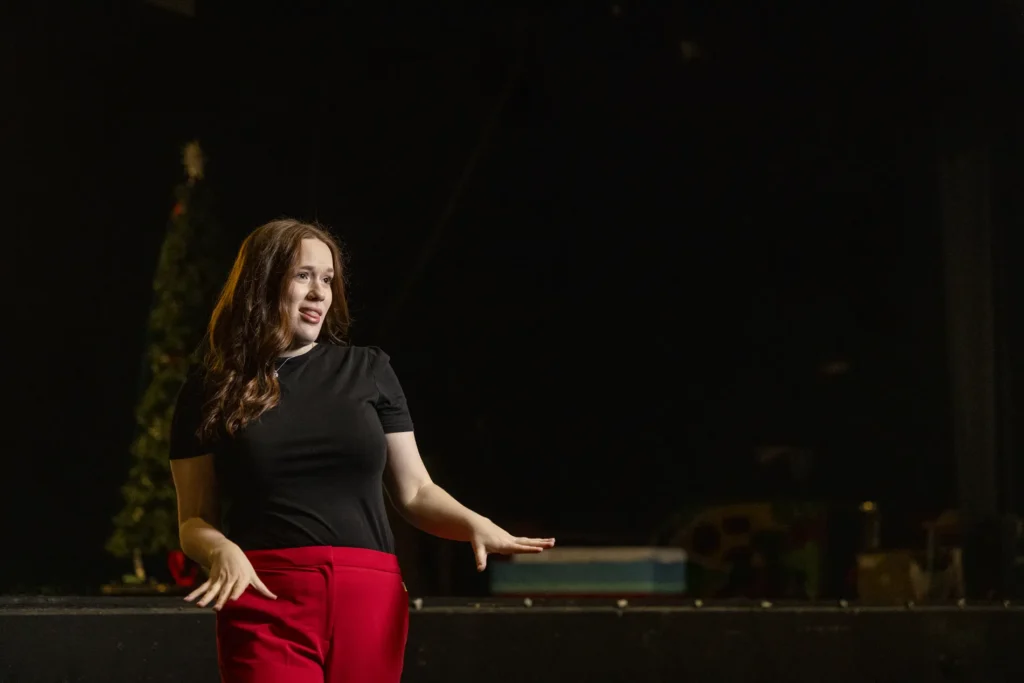
Gilbert’s ASL skills brought accessibility to the arts when she joined a small team of interpreters for UGA Theatre productions like Little Shop of Horrors and 9 to 5: The Musical, interpreting multiple characters from her spot in front of the stage.
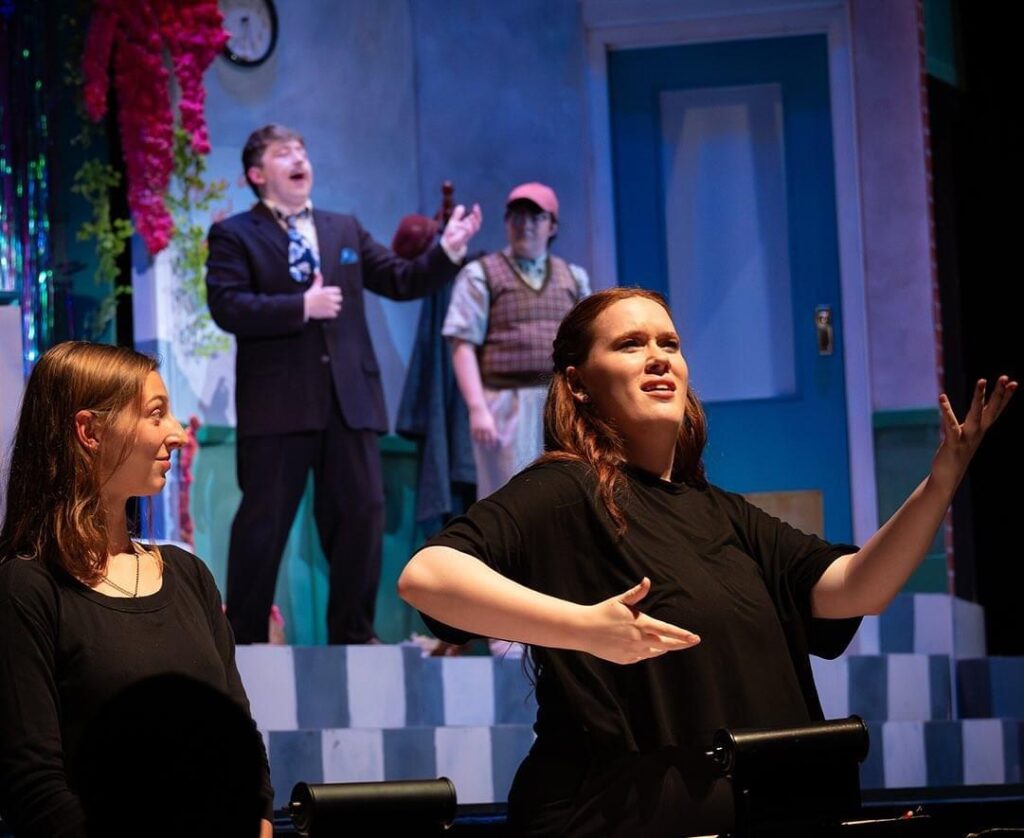
Musical theater interpretation is a unique challenge, requiring weeks of preparation, script translation, and character study.
“Traditional interpreting is live. It’s in the moment. You are hearing it in your ear and producing it with your hands,” she explains. “In musical theater, because you have time in advance, you actually translate the script into American Sign Language beforehand.”
Designing for Everyone
Gilbert knows accessibility isn’t automatic—so she helps build it.
One of Gilbert’s proudest accomplishments stemmed from a simple observation: The UGA Safe App’s emergency contact feature wasn’t accessible for all users. It defaulted to voice calls in emergencies, and the feature to send a text message to police seemed hard to find.
So Gilbert spoke up. She met with the UGA Police Department and advocated for a redesign. Within two weeks, the app was updated.
“This impacts more people than you think. And they listened,” Gilbert says. “They were willing to learn and change.”
“Accessibility isn’t just about ramps and captions. It’s about designing experiences that include everyone from the start.”
Ava Gilbert
As part of a collaboration with UGA’s Active Learning team, Gilbert reviewed and analyzed more than 40 teaching techniques published on their website. Would this work for a student with a disability? What barriers might a student with ADHD face in a group brainstorming session? How could a blind student participate in a visual mapping activity?
Gilbert documented potential challenges across a spectrum of disabilities and collaborated with faculty and Ph.D. student Madison Livingston to develop alternatives integrated into the UGA Active Learning website.
As Gilbert works on her MPA, considering careers in interpreting, policy, and public service, she continues her mission to advocate for and educate others about accessibility as the first-ever Digital Accessibility graduate assistant for Enterprise Information Technology Services.
“Accessibility isn’t just about ramps and captions,” she says. “It’s about designing experiences that include everyone from the start.”
Written by: Caroline Paris Paczkowski
Photography by: Billy Schuerman and Clay Chastain
Design by: Kaiya Plagenhoef