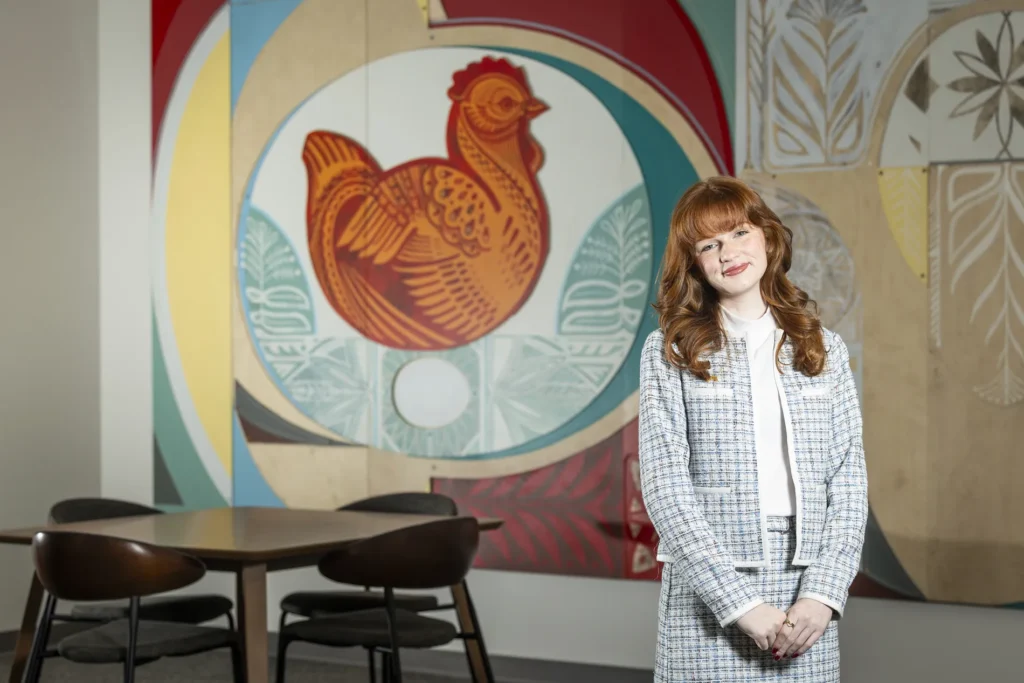
Leading the Flock
Ambition and agriculture drive a UGA poultry science student.
When Addie Bennett moved to Athens, she wasn’t intimidated by class sizes, game days, or the plethora of student club options. What caught her off guard was the existence of crosswalks …and how to use them.
Bennett came from the small Georgia town of Millen with a high school graduating class of 55. She is one of only a few people from her hometown to be admitted to the University of Georgia as a first-year student in the last several decades. So she knew there’d be a bit of a culture shock.
“I had never lived in a place where there were more than five or six cars on the road at one time,” says Bennett. “Most people where I grew up become a nurse, a teacher or a prison guard, and there’s not really anything in between. But I’ve always been ambitious and wanted to see what was out there and what I could do.”
Redefining Rural Perceptions
Bennett grew up around cattle and had planned to be a large animal veterinarian. However, the poultry science department, housed in the UGA College of Agricultural and Environmental Sciences, lured her into a different field. Now she can’t imagine any other path.
She credits this to community recruiting events, as well as the efforts of a college outreach coordinator. That same community outreach that allowed Bennett to see the department’s integrated academic rigor, hands-on teaching, and research and professional development is now under her purview as an avian ambassador. Bennett regularly engages with prospective students and shares the same magic that motivated her to become a self-proclaimed chicken scientist.
Part of that involves speaking with potential Bulldogs who come from similar backgrounds. Rural communities sometimes lack the capacity to offer dual enrollment, Advanced Placement courses, or college prep. But that doesn’t mean rural students are any less worthy of admission, Bennett says.
“Rural students aren’t disadvantaged. We’re not sad little kids who can’t compete. We just don’t have the same access to those resources, to those materials, to the information that everyone else does,” she says. Instead, she says, rural students come with different skills and a different way of life. What matters is knowing how to use that background to their advantage.
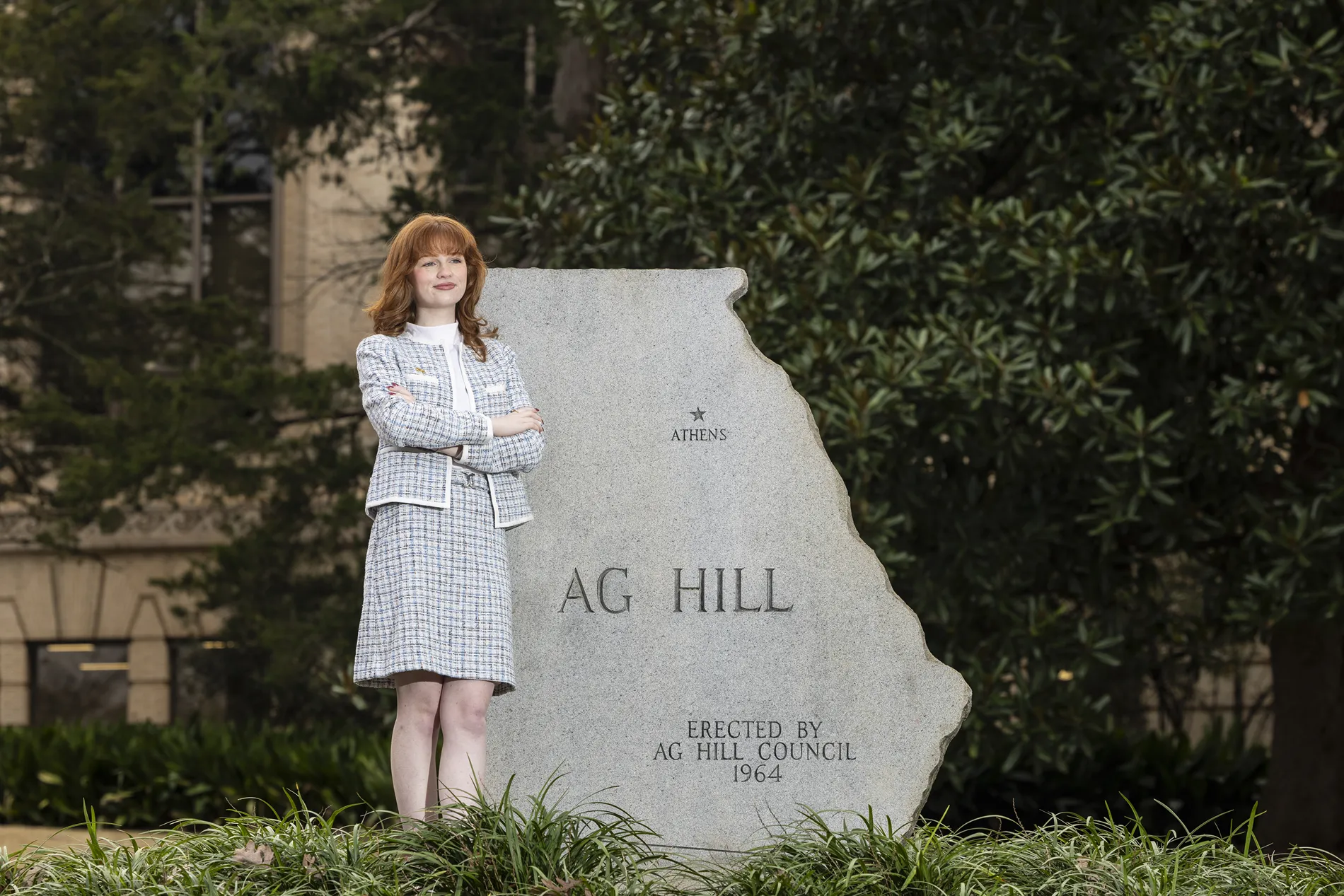
Poultry on the Potomac
As an avian ambassador, Bennett prioritizes building community within UGA’s agricultural world. Her favorite place to do that personally? In the lobby of the newly constructed poultry science building.
If you sit there long enough, good things happen, she says. It’s not only the place she credits with finding her core friend group, but it’s also the best spot for students to help each other and themselves.
“Sitting 3 feet from someone, you’ll eventually form that community,” Bennett says. “When you’re first here, you’re trying to establish who you are as a student, so this program has given me a nice home away from home.”
Bennett believes she can keep advocating for underdog communities, especially rural ones, by becoming an agricultural policy advisor in Washington, D.C.

“It’s like speaking an entirely different language. I was bilingual with cattle and poultry, and I had to become trilingual with policy.”
Addie Bennett
To help her on that path, she has so far secured two distinct, selective opportunities. As a Georgia legislative intern, Bennett spent an entire semester in Atlanta, working full-time with a Senate committee, researching and writing agricultural policy.
“At first, I had no idea what I was looking at,” she admits, “but I did a lot of reading, connecting with people in the fertilizer and pesticide industries. It became my favorite part of that entire internship—just asking people what they thought and why they thought that way.”
Three weeks later, Bennett hopped on a plane to Washington to spend her summer as a Congressional Agricultural Fellow. There, she worked with the Georgia delegation in the House Appropriations Committee.
When she completes her bachelor’s degree in 2027, Bennett will also finish her master’s in agribusiness through the Double Dawgs program, UGA’s offering to earn both bachelor’s and master’s degrees in five years or less.
“Afterwards, I think I’ll be right back on the Potomac,” she says.
Not only will she be ready to tackle problems for rural communities, but she’ll be able to tackle any crosswalks she encounters.
Written by: Savannah Peat
Photography by: Chamberlain Smith
Design by: Kaiya Plagenhoef